Liquid Handling
Convenient efficiency in the laboratory thanks to solutions with application expertise
Convenient efficiency in the laboratory
Dosing, transferring and measuring liquids are key tasks in the daily routine of a laboratory. Ensuring reliable and reproducible results requires the highest precision, purity and material quality.
With innovative liquid handling solutions from SARSTEDT, you can meet these requirements - whether mechanical or automated pipetting. All solutions are designed with the application in mind and support professionals through ergonomically optimised designs and consideration of the requirements of workflow and everyday laboratory work. With our extensive product portfolio of high-quality pipette tips, serological pipettes, transfer pipettes and pipetting aids, you have the right tool for every task. Discover the world of SARSTEDT and optimise your use of materials and instruments with our practical tips and recommendations.
Liquid Handling
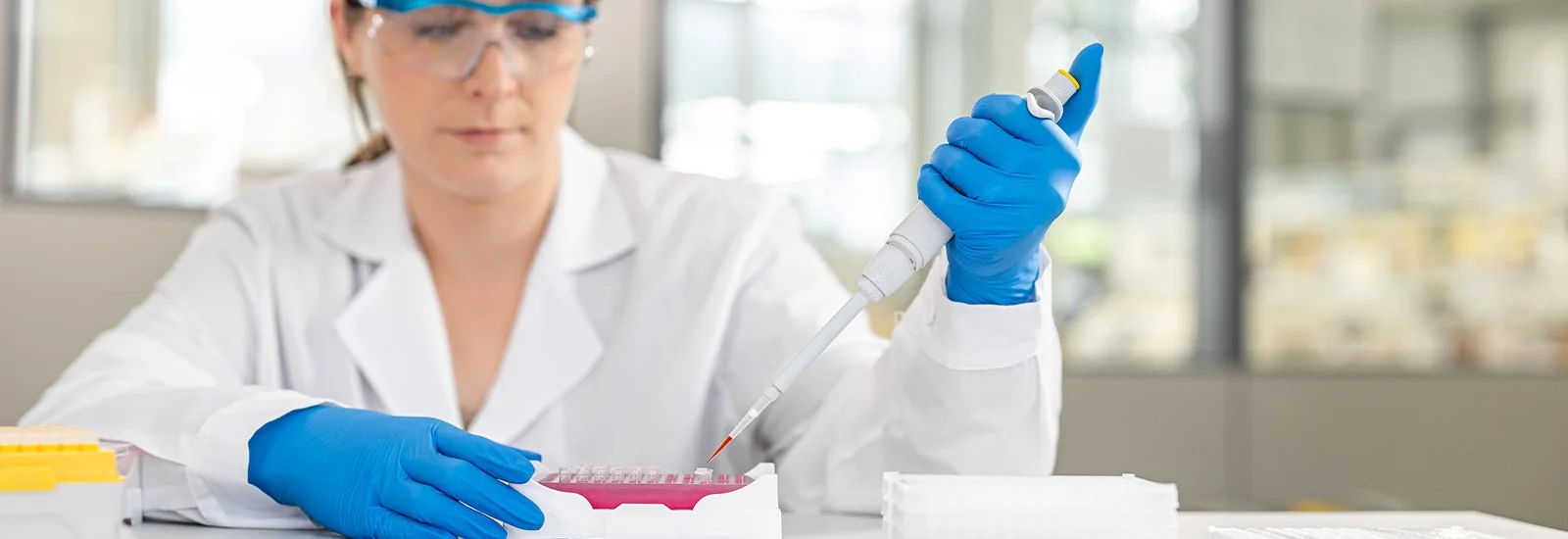
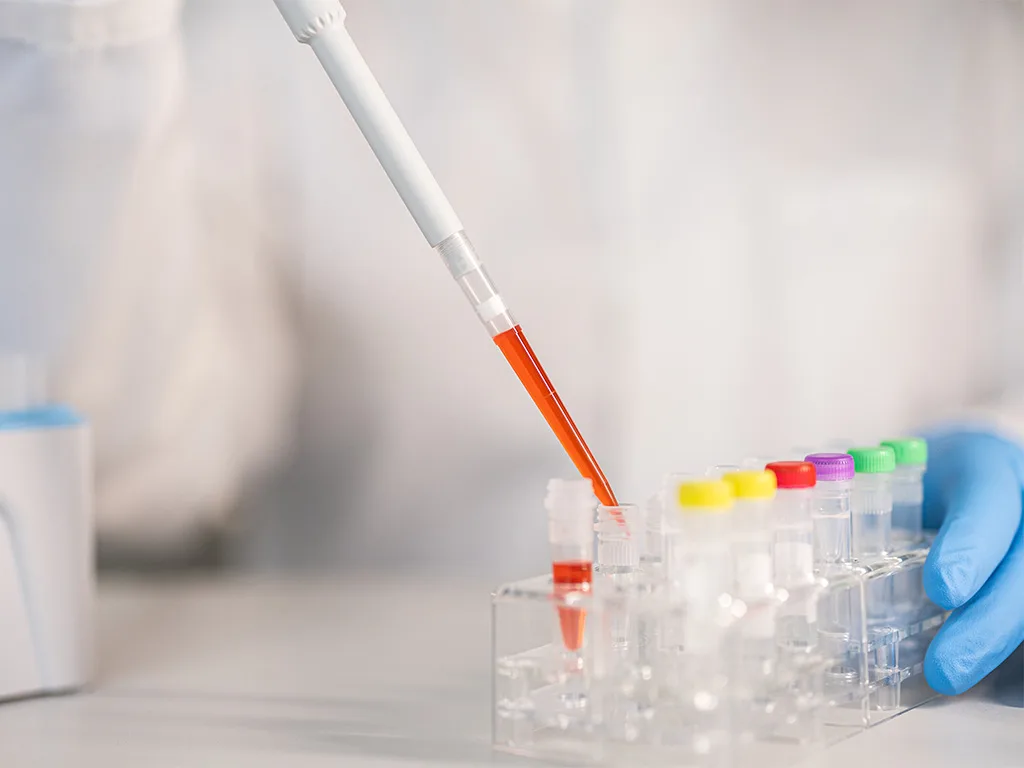
The transfer of liquids is an integral part of laboratory routine. This core competence in laboratory technology is referred to as liquid handling. This includes all possible work steps from filling and dispensing the liquid to mixing and safe transport, all of these steps constitute liquid handling.
To ensure that the procedures during the liquid handling process are correct, the proper dosing of liquids as well as the quality and precision of the materials used, such as pipettes and pipette tips, are crucial.
How sustainable can pipette tips be? Making your laboratory routines more sustainable.
The use of plastic consumables is unavoidable in scientific laboratories. From Pipette tips and Petri dishes to disposable gloves, it is an indispensable part of the daily workflow. However, increasing awareness of environmental issues and sustainability presents us with the challenge of minimising our plastic consumption and finding more sustainable alternatives.
Small defined volumes
Manual pipettes are hand-held devices for precise liquid transfer in the microlitre range. This allows mechanical single and multi-channel pipettes to transfer small volumes from a few microlitres up to 10 ml.
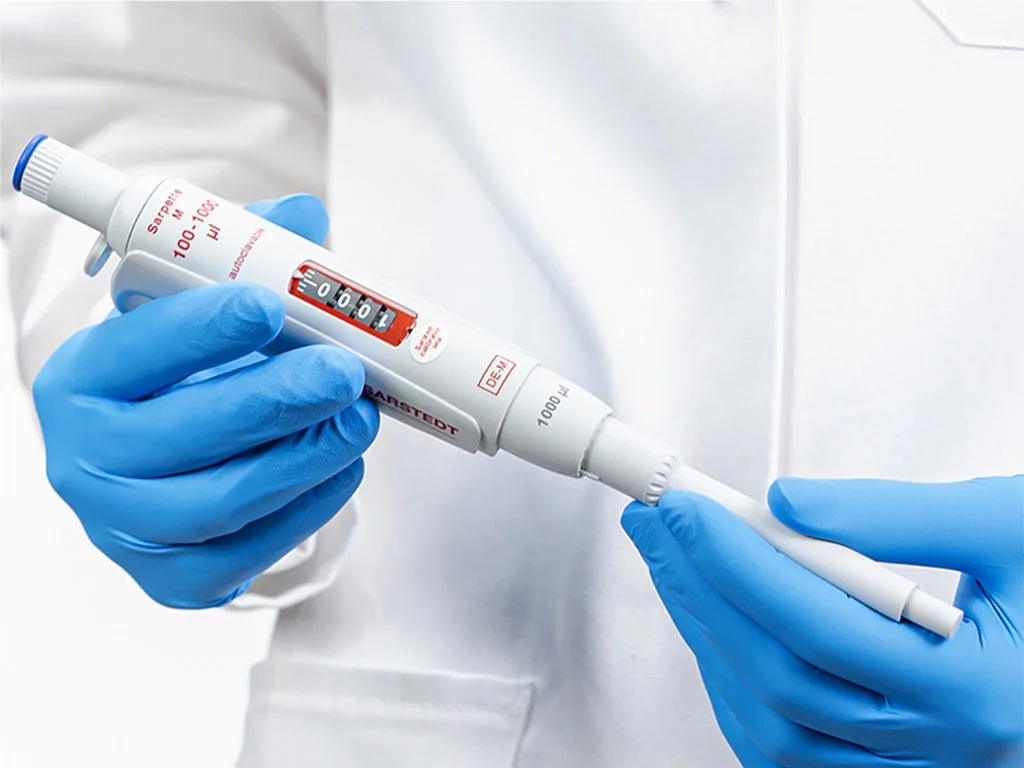
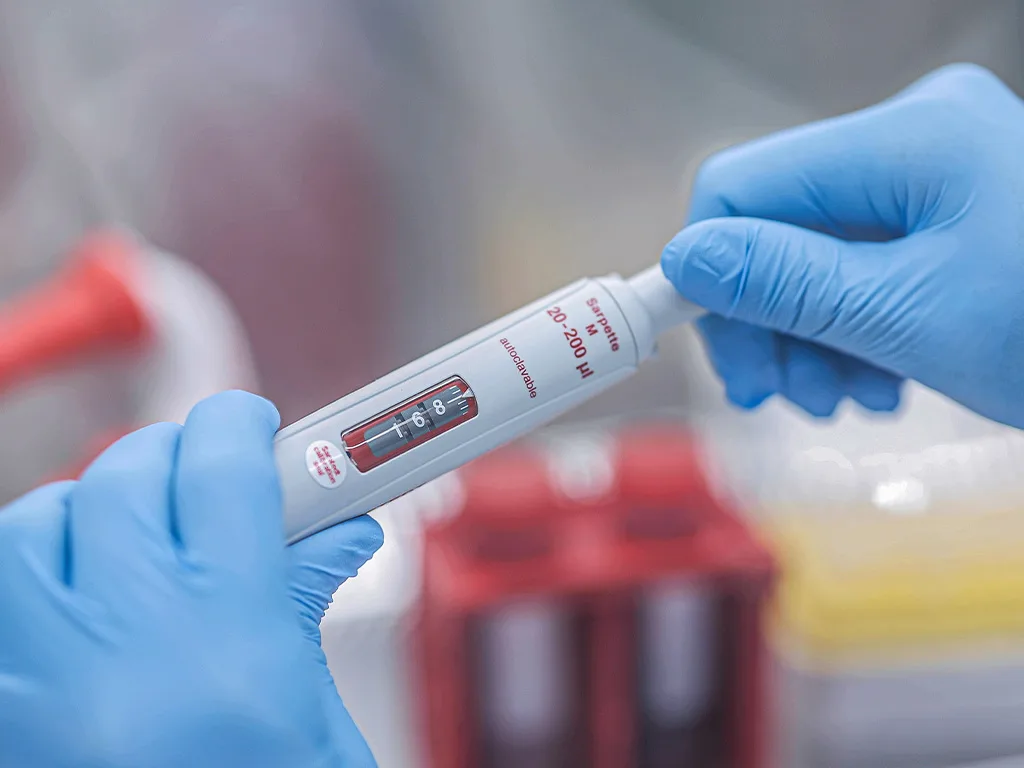
Piston pipettes, such as the SARSTEDT Sarpette® M, are flexible pipetting tools with an adjustable volume and ergonomically optimised design. The flexibly adjustable tip ejection also ensures the pipette tip used fits perfectly. Thanks to a range of different models, you have the right pipette at hand for every application.
Its compatibility with a variety of pipette tips makes the Sarpette® M the ideal professional tool for precise measurements and accurate dosing. In addition to sequencing, it is used, for example, in PCR and ELISA tests and in many other areas of application.
Product Highlights
Large defined volumes
Do you want to quickly transfer and accurately measure larger volumes in the millilitre range? Serological pipettes in combination with practical pipetting aids are available for this purpose.
The pipettes made from crystal-clear polystyrene have positive and negative scaling and are available from SARSTEDT as individual sterile pipettes or in bags of multiple sterile pipettes. The volume of the serological pipettes can be identified at first glance using the international colour code.
Ergonomically designed pipetting aids are ideal for applications in cell culture, media preparation and liquid transfers. In combination with our serological pipettes certified for cell culture applications, this minimises the risk of contamination and ensures convenience, even in the face of long pipetting lines.
Product Highlights
What pipettes are there?
Depending on the task and the amount of liquid to be processed, you can choose from three different types of pipettes. The range includes simple transfer pipettes with integrated pumping device, precise measuring pipettes and piston plus multi-channel pipettes.
In addition to the application focus of the respective laboratory, the specific dosing task is also crucial when choosing the right pipette.
While Pasteur pipettes and graduated dropper pipettes are used for larger volumes with low precision requirements, measuring and volumetric pipettes are recommended for precisely dosing several millilitres of liquid. With microlitre pipettes, you can handle very small quantities of liquids ranging from a few millilitres to less than one microlitre.
Pipetting: Manual or electric
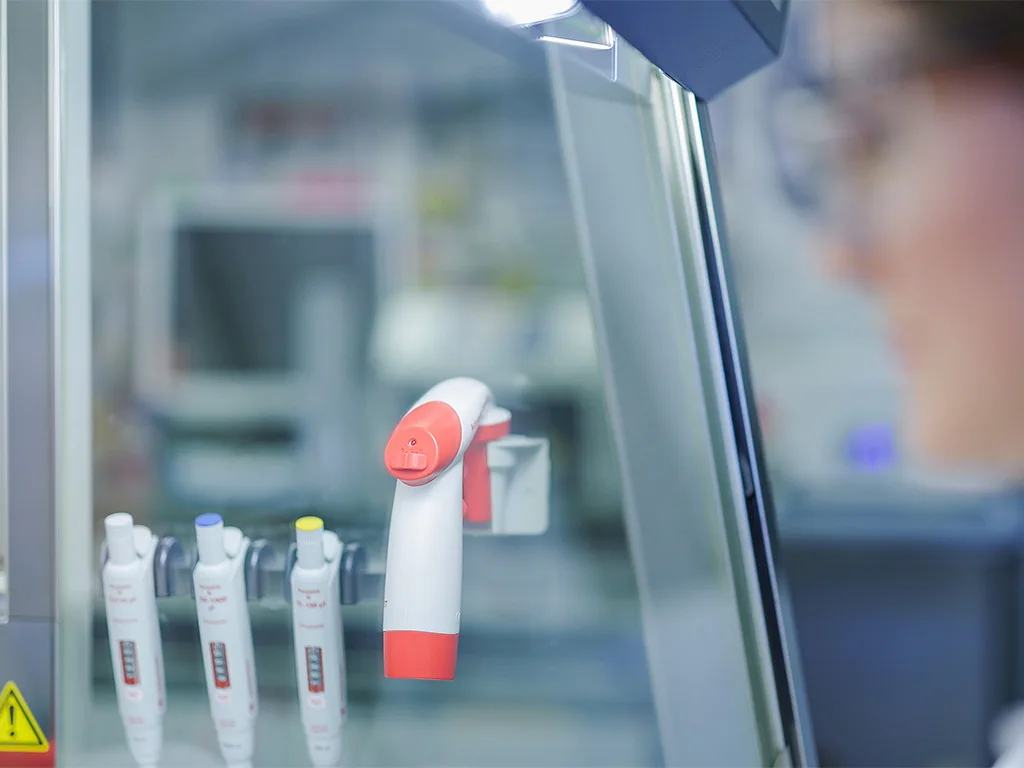
Practical, precise and cost-efficient, both manual and electronic pipettes are considered practical all-rounders for laboratory work. Their easy-to-maintain properties mean they comply with the applicable hygiene regulations. Finally, they are not only easy to clean and therefore reusable, but also fully autoclavable.
Manual piston pipettes require physical force to operate the piston and dose the liquid, while electric piston pipettes use a motorised mechanism that is activated by pressing a button. Especially when carrying out repetitive pipetting tasks, electrical variants score points owing to their ergonomics and high precision.
Mechanical pipettes, on the other hand, are less prone to malfunctions and require less maintenance due to the lack of electronics. They often have a lower weight than their electronic alternatives. The wide selection of manual pipettes offers the right choice for every application.
Pipettes and accessories: The importance of compatibility
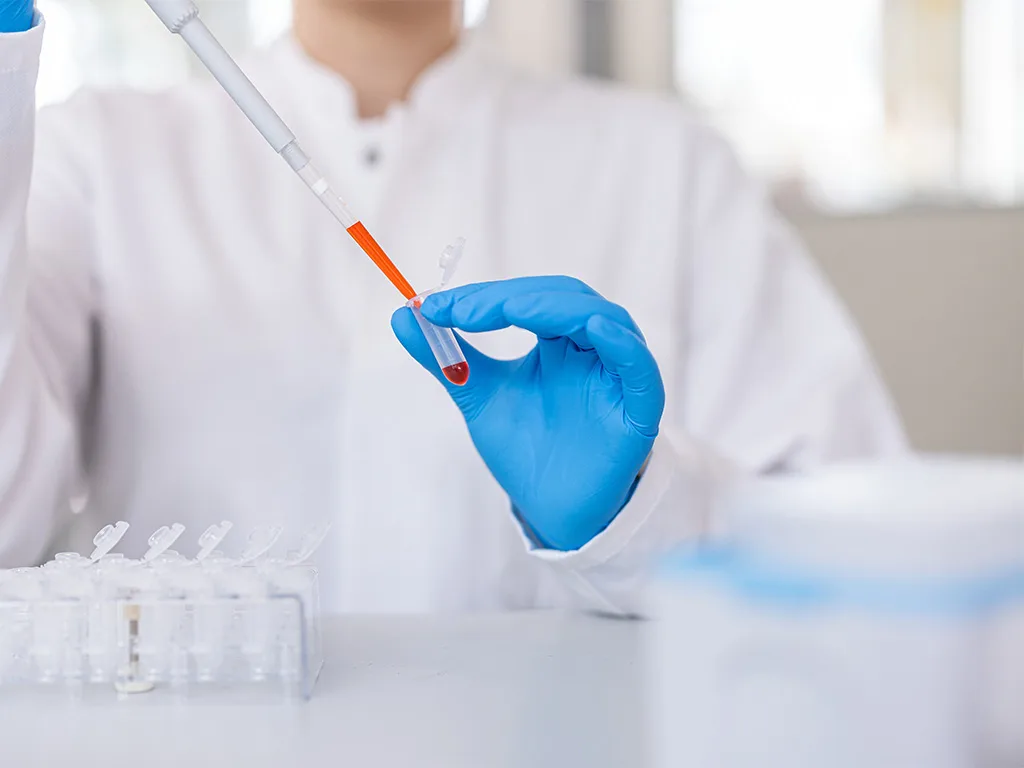
For reliable results, the perfect interplay between material components is crucial. Environmental factors such as temperature and air pressure can also affect measurement accuracy.
We outline the difference between compatibility and conformity and explain what matters when it comes to calibration.
Proper pipetting
In addition to precise instruments and high-quality equipment, one thing is crucial when it comes to pipetting: The right technique. A proficient and consistent pipetting routine is one of the most important factors in avoiding systematic errors when pipetting.
To exclude possible sources of error when pipetting, it is advisable to standardise employees’ pipetting techniques. This allows you to find a practicable consensus and avoid pipetting errors:
Check the pipettes’ integrity during condition checks.
Adjust pipette, pipette tips and liquid to the ambient conditions.
When taking samples, ensure that the immersion angle does not exceed 20 degrees. The correct position ensures that you only pick up liquid, and no air pockets.
Do not immerse the pipette tip deeper than 2 to 3 millimetres into the liquid. The correct penetration depth prevents the pipette from coming into contact with the fluid outside of the tip and ensures that the correct quantity of liquid is taken up by the existing surface tension.
Dispense the pipette tip against the wall of the target vessel to ensure the full amount of liquid is delivered.
Adjust the calibration when working with liquids that have a higher density than water.
Maintaining and servicing pipettes
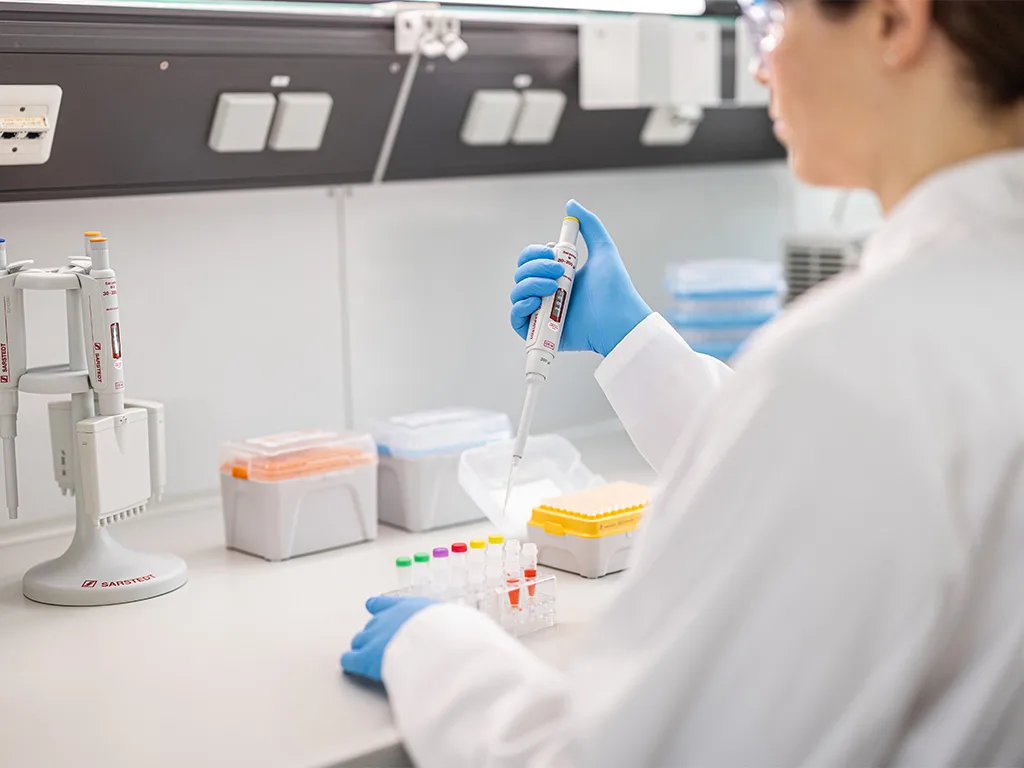
Like most laboratory instruments, frequently used pipettes can also wear out. To ensure the integrity of the materials and full functionality, regular pipette maintenance is therefore advisable. Common test intervals require maintenance and calibration of pipettes once a year.
We at SARSTEDT are happy to handle professional pipette repair and maintenance.. The processing time is a maximum of 10 working days, depending on the size of the pipette delivery.
Our pipette service includes these services:
Pre-check
Incoming calibration
Functionality test
Cleaning and maintenance
Repair: O-ring exchange, if necessary
Outgoing calibration with calibration certificate and measurement protocol included
Sustainability in the laboratory
Not just at home, but also in everyday work, topics such as sustainability and environmental compatibility are increasingly coming into focus. Particularly reducing waste and using energy efficiently are of crucial importance in laboratory environments and medical technology.
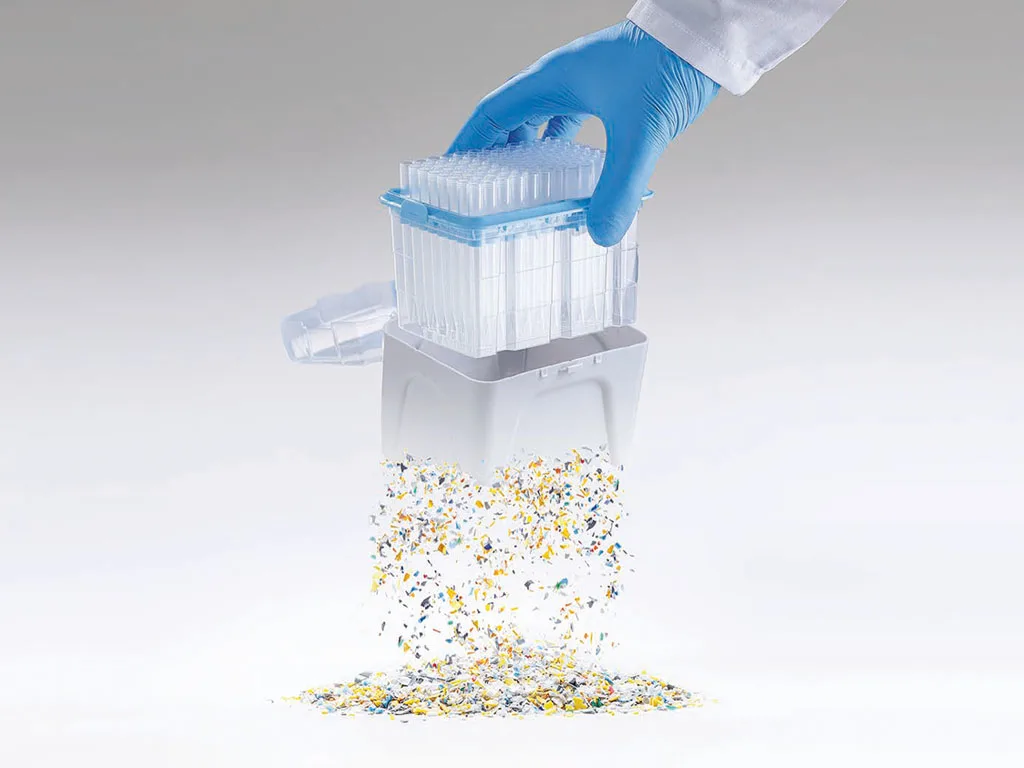
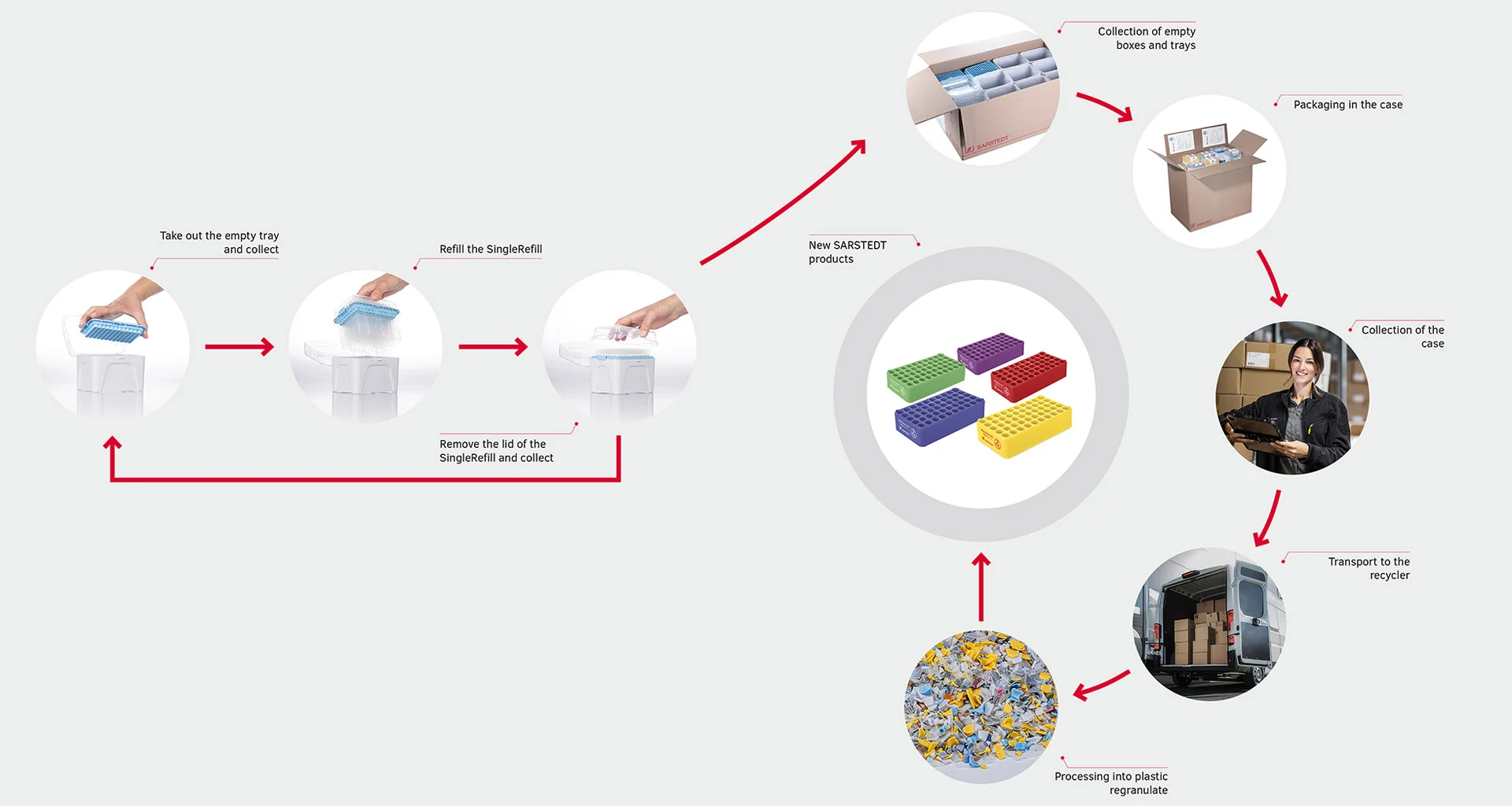
With the Refill Revolution, SARSTEDT presents a contemporary pipette tip solution that allows you to easily establish sustainability in the laboratory. The resource-saving concept is based on a perfectly coordinated system. Minimal material costs meet highest purity and comfort.
Space-saving and stackable boxes with resistant laser treatment trays, pipette tips are available in three possible types of packaging:
A multi-use box
hygienic single refill for refilling
compact StackPack
Means with the SARSTEDT Refill Revolution, you save 64 % material and 70 % storage space.
In addition, we offer a recycling scheme for the boxes of pipette tips. The collected boxes will be picked up and processed into regranulate at recycling companies we trust. From this regranulate, new products are produced, Sarstedt block racks are manufactured in this manner.
Overall, through our recycling scheme , we have already collected 34 tons of plastic in 2024 globally, from which new regranulate is produced.
Automated pipetting
Efficient work also requires good time management. Automatic pipetting is increasingly replacing the mechanical manual procedure. Especially in laboratories with high throughput, automated pipetting systems are an investment in the present and future.
Precisely programmed pipetting robots and trained laboratory staff work hand in hand to maximise efficiency. Laboratory automation allows for a streamlined work process, especially in laboratorieswith high throughput. This allows for both the collection and precise dosing of liquids to be taken over by automated systems.
In addition to the stand-alone attachment and ejection of the pipetting tips, fast and accurate multiple dosing is also possible.
Reducing manual work and minimising human carelessness errors are among the most important advantages of innovative pipetting machines.
Using pipetting aids correctly
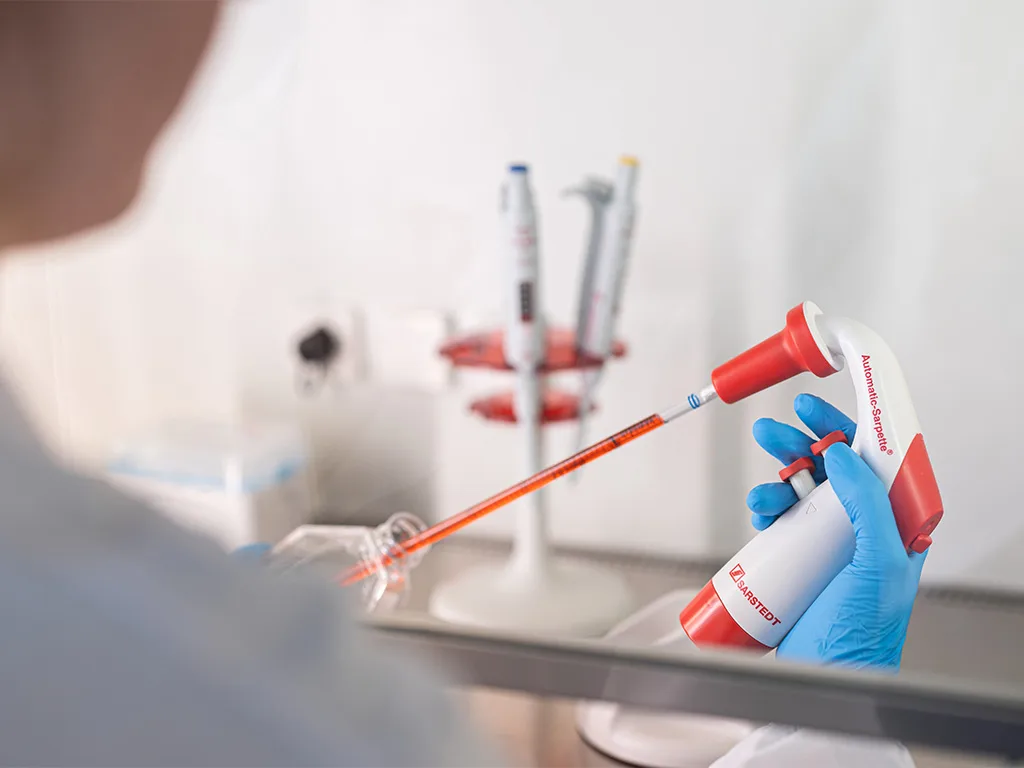
In addition to mechanical pipetting aids such as attachable balls made of rubber or silicone, electronic pipetting aids are now the preferred choice in everyday laboratory work. With a ball, you create a vacuum by pressing and releasing it in order to suck in the liquid and release it in a controlled manner. Pipetting aids such as the Automatic-Sarpette® by SARSTEDT do this and other work steps with the touch of a button.
Product Highlights
Life science solutions such as the Automatic-Sarpette® by SARSTEDT can be used in combination with all serological pipettes and volumetric pipettes from 0.1 to 100 ml. The ergonomic design and one-handed operation support fatigue-free working and take the strain off employees.
Thanks to the precise and delicate filling and dispensing speeds, you can pipette large volumes quickly and control smaller volumes as well as possible. The replaceable NiMH battery is impressively reliable with an operating time of up to eight hours.
Life is not always science.
But science is our Life.
At SARSTEDT, our work follows the principle: Impress with quality, retain with service. Reliability and experience, innovation and dynamism – we build on proven and reliable values, combined with active processes and partnership-based thinking and action.

My Sarpette® M
With the Sarpette® M, SARSTEDT has finally further developed and optimized pipetting. First and foremost, the Sarpette® M is designed to be user-friendly and, with its uniquely positioned ejector button, enables a particularly ergonomic workflow. The highly precise handling, low weight and high-quality workmanship set the benchmark for your day-to-day laboratory work.
The bottom line is that the Sarpette® M pipette offers outstanding performance at a very attractive price and is available for immediate delivery.